
Health and Beauty
13 min read
MitoPRO X vs. MitoADAPT 4.0: Which Red Light Therapy Panel Is Right for Different Needs?
August 12 , 2026
By Sienna Claire
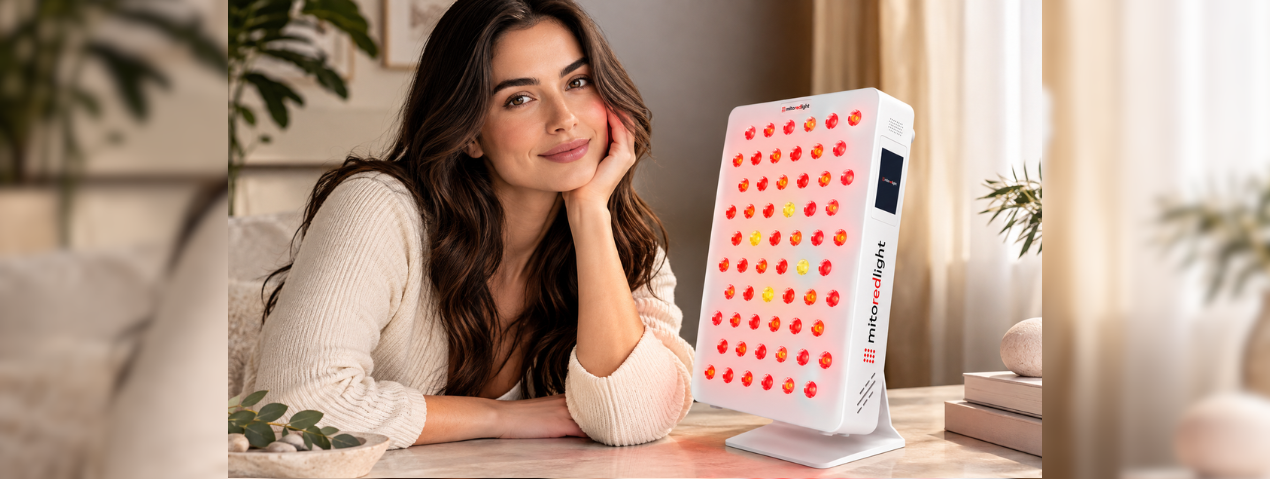
Red light therapy has become an increasingly popular addition to modern wellness routines, with home-use panels offering a convenient way to incorporate red and near-infrared light into regular self-care. As the category has expanded, however, choosing the right panel has become more complicated. Different devices can offer different wavelengths, treatment modes, panel sizes, controls, and customization options.
Red light therapy has become an increasingly popular addition to modern wellness routines, with home-use panels offering a convenient way to incorporate red and near-infrared light into regular self-care. As the category has expanded, however, choosing the right panel has become more complicated. Different devices can offer different wavelengths, treatment modes, panel sizes, controls, and customization options.
Two advanced options from Mito Red Light are the MitoPRO X Series and the MitoADAPT 4.0 Series. Both are designed around red and near-infrared light therapy, but they take different approaches to customization and versatility. The MitoPRO X combines six wavelengths with touchscreen controls and mobile app integration, while the MitoADAPT 4.0 expands the wavelength selection to eight and introduces 11 selectable modes.
Understanding those differences can make it easier to determine which type of panel better matches a particular wellness routine. Rather than assuming that the most feature-rich option is automatically the best choice, it is useful to consider how wavelength variety, treatment modes, controls, and intended use fit together.
Understanding Red Light Therapy Panels
Red light therapy, commonly discussed within the broader field of photobiomodulation, uses specific wavelengths of light to interact with biological tissues. Red wavelengths are generally associated with more surface-level applications, while near-infrared wavelengths can reach deeper into tissue.
For home users, a panel can provide exposure across larger areas than smaller handheld devices. This makes panel selection particularly important because the device can become part of a recurring routine rather than an occasional wellness tool.
The most important considerations include the wavelengths provided, the ability to control different light channels, the size of the panel, ease of use, treatment settings, safety certifications, and the flexibility to adapt sessions over time.
A panel with more wavelengths is not necessarily better for every person. Instead, the value of additional wavelengths depends on whether the user actually benefits from having access to more targeted configurations.
MitoPRO X: A Balanced Approach to Advanced Red Light Therapy
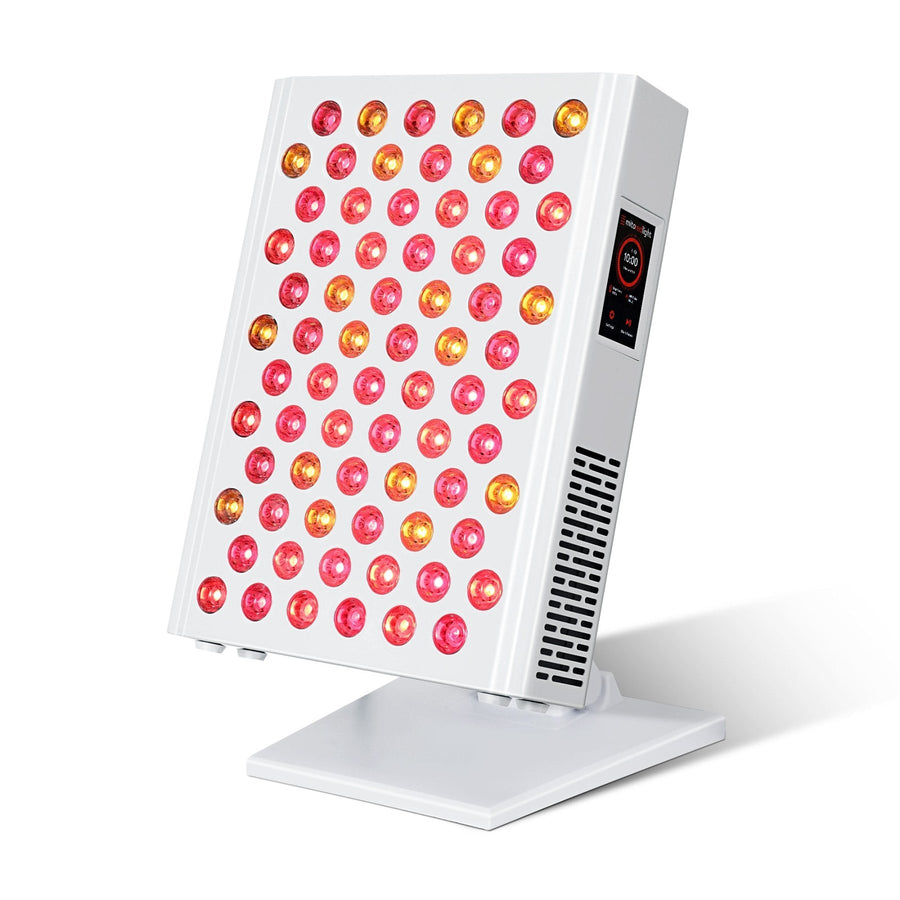
The MitoPRO X Series is designed as a high-performance panel for users who want a combination of wavelength variety and straightforward controls. According to Mito Red Light, the series uses six peak wavelengths: 590nm, 630nm, 660nm, 810nm, 830nm, and 850nm.
The selection covers both visible red and near-infrared ranges. The 590nm wavelength is an amber wavelength, while 630nm and 660nm are red wavelengths. The 810nm, 830nm, and 850nm wavelengths fall within the near-infrared range.
This gives the MitoPRO X a broad spectrum without requiring users to manage an unusually large number of individual settings.
One of its notable design elements is TruDUAL Chip Technology. Mito Red Light states that the LEDs use independent circuits, allowing the panel to operate with red light, near-infrared light, or a combination of the two.
That design can be useful for people who want greater control over the type of light used during a session without moving between multiple devices.
MitoADAPT 4.0: Designed for Maximum Customization
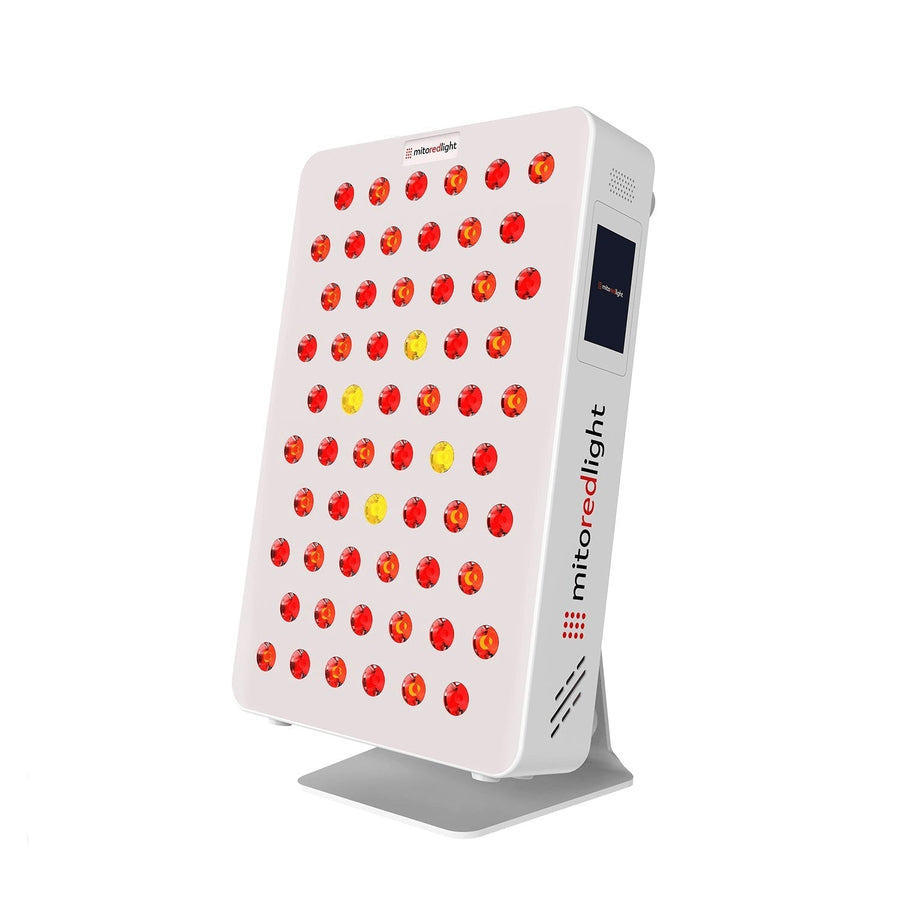
The MitoADAPT 4.0 takes a more customizable approach. It uses eight wavelengths: 590nm, 630nm, 660nm, 670nm, 810nm, 830nm, 850nm, and 940nm.
Compared with the MitoPRO X, the MitoADAPT 4.0 adds 670nm on the red side and 940nm in the near-infrared range. Those additions expand the available spectral range and help support the panel's broader collection of treatment modes.
The major distinction, however, is not simply the number of wavelengths. The MitoADAPT 4.0 is built around 11 selectable modes. These include full-spectrum, red-spectrum, segmented red and near-infrared, amber and near-infrared, deep near-infrared and red, Mito-NIR and red, red-only, amber-red-only, deep NIR-only, core NIR-only, and broad NIR-only configurations.
This makes the MitoADAPT 4.0 particularly interesting for experienced users who want to adjust light combinations according to different goals or treatment areas.
MitoPRO X vs. MitoADAPT 4.0: Wavelength Comparison
Wavelength selection is one of the most important differences between the two series.
The MitoPRO X provides six wavelengths:
- 590nm
- 630nm
- 660nm
- 810nm
- 830nm
- 850nm
The MitoADAPT 4.0 provides eight:
- 590nm
- 630nm
- 660nm
- 670nm
- 810nm
- 830nm
- 850nm
- 940nm
The MitoPRO X therefore provides a carefully selected range that covers amber, red, and near-infrared light. Its six-wavelength configuration can be well suited to users who want broad coverage without an extensive collection of modes.
The MitoADAPT 4.0 expands that foundation with 670nm and 940nm. The additional wavelengths contribute to the system's ability to create more specialized combinations.
For someone new to red light therapy, six wavelengths may already provide more than enough flexibility. For someone who enjoys experimenting with different protocols and wants greater control over specific wavelength combinations, the additional options of the MitoADAPT 4.0 may be more appealing.
Comparing Treatment Modes and Customization
The difference in modes is arguably the clearest distinction between the two products.
The MitoPRO X has three onboard modes. These include an all-wavelength configuration, a red and amber configuration, and a near-infrared configuration. The company also provides additional app-based functionality, including NIR Extend and other modes that can be introduced through app updates.
This structure keeps the core experience relatively simple. A user can select a broad combination or focus on red/amber or NIR without navigating through a long list of presets.
The MitoADAPT 4.0 is built for a much wider range of configurations. Its 11 modes separate the wavelengths into specific combinations, including red-focused, NIR-focused, and mixed-spectrum settings.
That distinction matters because customization can be useful for people whose routines change. A person may want a broader full-spectrum session on one day and a red-focused or NIR-focused session on another.
The MitoADAPT 4.0 therefore has an advantage in terms of built-in versatility, while the MitoPRO X can be more approachable for people who prefer fewer choices.
Touchscreen and App Controls on the MitoPRO X
Technology and usability are another area where the MitoPRO X stands out.
The panel includes a full-color touchscreen, allowing direct control over settings. It also integrates with the Mito Red Light mobile app through Bluetooth. The app can be used for remote control, intensity management, session tracking, and access to additional modes.
For users who like tracking routines, this can be an important advantage. The app records session history and total minutes by mode, making it easier to monitor consistency.
The MitoPRO X also includes an alarm function and app-based access to features such as NIR Extend. According to Mito Red Light, NIR Extend can provide continuous NIR sessions for up to 20 minutes, with periodic red-light cycling.
This makes the MitoPRO X a strong option for technology-oriented users who want their light therapy device to feel integrated into a broader digital wellness routine.
The Advanced Mode Structure of the MitoADAPT 4.0
The MitoADAPT 4.0 places more emphasis on wavelength-level versatility than app-centered convenience.
Its 11 modes are designed around different combinations of its eight wavelengths. For example, the full-spectrum mode uses the complete wavelength selection, while other modes narrow the output toward red wavelengths, different NIR ranges, or specific combinations.
This architecture can make the panel particularly attractive to advanced users. Instead of simply selecting red, NIR, or a combination, users have more options for creating a session around a particular area or routine.
For example, Mito Red Light describes its segmented red and NIR mode as providing zone-targeting flexibility, while its red-only mode is positioned around collagen-focused applications. The company's descriptions also include specific NIR-only configurations for different intended uses.
As with any wellness technology, these manufacturer-described applications should not be interpreted as guarantees of medical outcomes. Individual responses to light therapy can vary, and people with medical conditions or concerns should consult an appropriate healthcare professional.
Which Panel Is Better for Beginners?
A beginner may value simplicity more than maximum customization.
The MitoPRO X can make sense in this situation because it combines six wavelengths with three straightforward onboard modes. The touchscreen interface provides direct control, while the app adds further functionality for users who want to explore more advanced settings later.
This creates a gradual learning curve. A new user can start with the primary modes before exploring app-based options.
The MitoADAPT 4.0 offers significantly more possibilities, but that flexibility can also require more decision-making. Eleven modes can be an advantage for an experienced user but may feel unnecessary for someone who simply wants a reliable red light therapy routine.
Therefore, beginners who prioritize a simple experience may lean toward the MitoPRO X, while beginners who enjoy learning about wavelengths and experimenting with protocols may appreciate the MitoADAPT 4.0.
Which Panel Is Better for Experienced Users?
Experienced red light therapy users are more likely to appreciate the expanded capabilities of the MitoADAPT 4.0.
The eight-wavelength system and 11 selectable modes provide more ways to adjust sessions. This can be particularly useful when a routine involves different body areas or different goals.
The MitoPRO X remains highly capable, especially for users who value app control and a streamlined interface. Its six wavelengths cover a broad range, and its TruDUAL chip design allows red and NIR channels to operate in different configurations.
The choice therefore depends on what "advanced" means to the individual. Someone who defines an advanced device by smart controls and digital tracking may prefer the MitoPRO X. Someone who defines it by wavelength and protocol flexibility may prefer the MitoADAPT 4.0.
Considering Panel Size and Treatment Coverage
Panel size should be considered alongside wavelength selection.
A smaller panel can be practical for targeted areas, while larger configurations can cover more of the body during a session. The MitoPRO X Series is available in multiple configurations, allowing users to build a setup around their available space and preferred treatment coverage.
Mito Red Light also highlights the ability to create multi-panel arrays with the MitoPRO X.
For a home wellness room, a larger panel can make sense when full-body exposure is a priority. For smaller spaces or more targeted use, a compact configuration may be more practical.
The same principle applies when considering the MitoADAPT 4.0. The advanced wavelength system can provide extensive customization, but selecting an appropriate physical size remains important for making the device convenient to use consistently.
Build Quality and Certification
Technical specifications are only one part of choosing a home red light therapy panel. Build quality, warranty coverage, testing, and certification can also influence purchasing decisions.
The MitoPRO X lists a three-year warranty and IEC 60601-1 certification on its product specifications.
The MitoADAPT 4.0 also lists a three-year warranty and IEC 60601-1 certification.
These details can provide useful context for buyers comparing premium panels. A device intended for frequent use should be evaluated not only for its advertised wavelength count but also for its construction, controls, warranty, and available support.
Mito Red Light states that its finished products undergo individual inspection and testing, with quality-control processes applied during manufacturing.
MitoPRO X vs. MitoADAPT 4.0 for Skin-Focused Routines
Both products can fit into routines where red light exposure is being explored for skin and beauty purposes.
The MitoPRO X includes 590nm, 630nm, and 660nm wavelengths, giving it a combination of amber and red light options. Mito Red Light describes these wavelengths in relation to skin health and collagen-related applications.
The MitoADAPT 4.0 adds 670nm and includes dedicated red-focused modes. Its red spectrum mode uses 590nm, 630nm, 660nm, and 670nm, while its red-only mode focuses on 660nm and 670nm.
For someone primarily interested in a straightforward red light routine, the MitoPRO X may offer sufficient flexibility. Someone looking for more specialized red-light configurations may find the MitoADAPT 4.0 more appealing.
MitoPRO X vs. MitoADAPT 4.0 for Recovery-Focused Routines
Near-infrared wavelengths are a significant part of both panels.
The MitoPRO X includes 810nm, 830nm, and 850nm NIR wavelengths. The company describes these wavelengths in connection with deeper tissue applications, including muscle and joint recovery.
The MitoADAPT 4.0 expands the NIR range by adding 940nm. It also offers several NIR-focused modes, including deep NIR, core NIR, and broad NIR configurations.
For users who want a straightforward combination of red and NIR, the MitoPRO X can be a practical choice. For users who specifically want to experiment with different NIR groupings, the MitoADAPT 4.0 provides more built-in options.
Which One Offers Better Value?
Value is not determined solely by price. A panel's value depends on whether its features match the way it will actually be used.
The MitoPRO X can offer strong value for users who want six wavelengths, touchscreen controls, app connectivity, and a relatively straightforward selection of modes.
The MitoADAPT 4.0 may provide greater value for users who will actively use its eight wavelengths and 11 modes. Paying for additional customization only makes sense when that customization is relevant to the user's routine.
For this reason, the MitoPRO X may be the better fit for someone seeking a premium but approachable panel, while the MitoADAPT 4.0 may be better suited to someone seeking the broadest possible protocol flexibility.
How to Decide Between the Two
Several questions can help narrow the decision.
If simplicity is the priority, the MitoPRO X has a clear advantage. Its three onboard modes make basic operation easier, while the touchscreen and app provide additional functionality for users who want it.
If customization is the priority, the MitoADAPT 4.0 stands out with eight wavelengths and 11 modes.
If digital tracking and smartphone control are particularly important, the MitoPRO X has a strong feature set through its dedicated app.
If wavelength variety is the main consideration, the MitoADAPT 4.0 provides two additional wavelengths and a broader selection of dedicated configurations.
If a user expects to build a more advanced routine over time, the MitoADAPT 4.0's extensive mode selection may offer more room for experimentation.
If the goal is a premium panel that balances advanced technology with ease of use, the MitoPRO X remains an attractive option.
MitoPRO X vs. MitoADAPT 4.0: The Final Verdict
There is no universal winner between the MitoPRO X and MitoADAPT 4.0 because the two panels are designed around somewhat different priorities.
The MitoPRO X is a strong choice for users who want six carefully selected wavelengths, red and NIR flexibility, a touchscreen interface, mobile app integration, and a relatively straightforward operating experience. Its TruDUAL chip technology allows independent red and NIR channels, while the app adds tracking and additional session options.
The MitoADAPT 4.0 is aimed more squarely at users who want maximum customization. With eight wavelengths and 11 selectable modes, it provides significantly more ways to configure light exposure. Its additional 670nm and 940nm wavelengths further expand the available spectrum.
For beginners and users who value simplicity, the MitoPRO X can be the more approachable option. For experienced users, enthusiasts, or anyone who places a high value on specialized wavelength combinations, the MitoADAPT 4.0 can offer a deeper level of flexibility.
Ultimately, the better panel is the one that fits the intended routine, available space, desired treatment coverage, preferred level of customization, and willingness to explore advanced settings. Both options come from Mito Red Light's premium panel lineup and provide a substantial step beyond basic two-wavelength red light devices.
A thoughtful comparison of wavelengths, controls, modes, panel size, and long-term usability can help make the investment more purposeful. Rather than choosing based solely on the number of features, buyers can focus on which features are most likely to support a consistent and practical home wellness routine.
live smarter
Shop smarter, live better, and stay ahead of the trends with our reliable recommendations!



Gadgets and Tech
14 min read
The Best Rechargeable Lights for Outdoor Adventures and Emergency Preparedness


Fitness and Sports
7 min read
Teeter Home Fitness Essentials: FitSpine LX9, FreeStep LT7, and ProFlex 432 for Recovery, Cardio, and Strength

trending
Fashion
5 min read
Halloween Scary Costumes: How to Create a Spooky Look Without the Stress
Health and Beauty
9 min read
Thinning Hair Deserves a Smarter Everyday Routine
Gadgets and Tech
14 min read
Essential Nighttime Gear for Outdoor Enthusiasts: Flashlights, Headlamps, and Bike Lights Explained
Fitness and Sports
15 min read
How to Make a Daily Vitamin Routine More Enjoyable and Consistent
Home and Decor
11 min read
How Smart Pet Technology Is Changing the Way We Care for Cats at Home
Travel
7 min read