
Health and Beauty
8 min read
From Tummy Time to Toddler Play: Creating a Comfortable Everyday Play Space
October 23 , 2026
By Sienna Claire
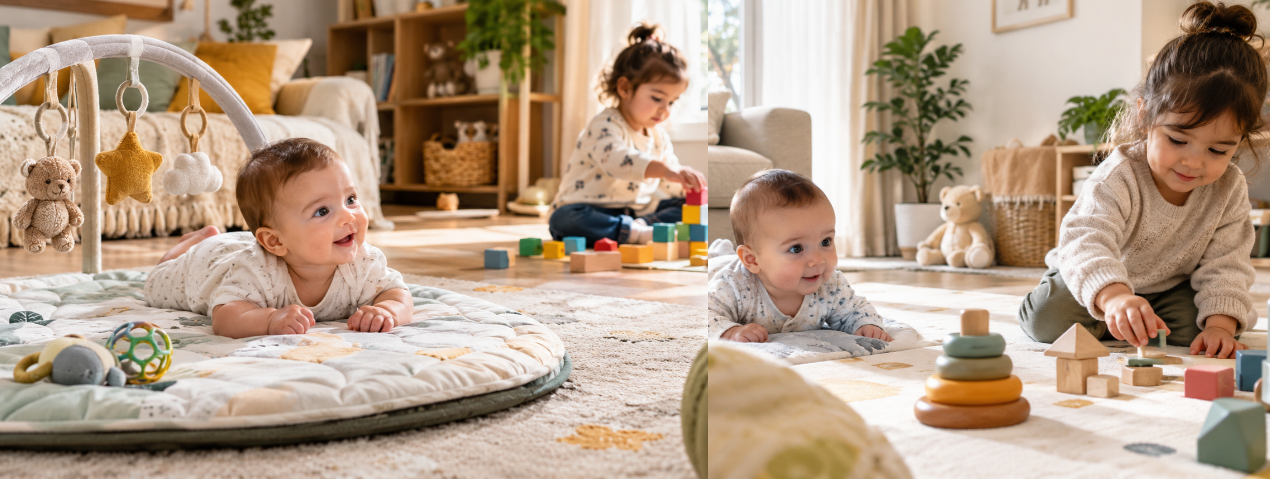
A baby's first year brings countless little milestones, from the first moments of tummy time to rolling, crawling, and eventually exploring the world on two feet. Throughout these stages, the floor becomes one of the most important places in the home. It provides room for movement, sensory exploration, family interaction, and everyday play.
A baby's first year brings countless little milestones, from the first moments of tummy time to rolling, crawling, and eventually exploring the world on two feet. Throughout these stages, the floor becomes one of the most important places in the home. It provides room for movement, sensory exploration, family interaction, and everyday play.
Creating a comfortable play space does not require a separate nursery or an elaborate playroom. With thoughtful planning, a simple corner of the living room or a section of the nursery can become a welcoming environment for babies and toddlers. The key is finding a balance between comfort, practicality, safety, and interior design.
Modern play mats make this easier by combining cushioned surfaces with designs that complement contemporary homes. Options such as The Gatherer Play Mat, The Beachcomber Play Mat, and The Globe Trotter Play Mat from Totter + Tumble demonstrate how a dedicated play area can fit naturally into everyday family life.
Why a Dedicated Floor-Play Space Matters
Floor play gives babies opportunities to move their bodies, explore their surroundings, and interact with caregivers. During supervised tummy time, babies practice lifting their heads and gradually develop the strength needed for later movements. As mobility increases, an open floor area provides room to reach for toys, roll, crawl, and investigate objects suited to their developmental stage.
A designated play area also helps parents establish a predictable space for daily activities. Rather than constantly moving blankets, cushions, and toys around the home, families can create one practical location for reading, playing, and spending time together.
Comfort is an important consideration, particularly when hard flooring dominates the home. A cushioned play mat can create a more comfortable surface for babies and adults during floor-based activities. However, babies should always be supervised, and sleep should take place on an appropriate, firm, flat sleep surface rather than a padded play mat.
Choosing a Play Mat for Everyday Family Life
A good baby play mat should do more than define a play area. It should suit the available space, support everyday routines, and remain easy to maintain as family needs change.
Several factors deserve attention when comparing options.
Cushioning: A cushioned surface can make floor play more comfortable for babies and caregivers. The thickness, firmness, and construction should be considered alongside the activities taking place on the mat.
Easy cleaning: Spills, drool, snack crumbs, and toy marks are part of everyday life with young children. A wipe-clean surface can simplify maintenance and help parents keep the play area tidy.
Room-friendly design: Since play mats often remain visible throughout the day, their colors and patterns can influence the overall appearance of a room. Neutral tones and understated designs can blend with existing furniture and decor.
Suitable dimensions: The play mat should provide enough room for age-appropriate activities without obstructing walkways or creating unnecessary clutter. Measuring the intended area before purchasing helps avoid sizing problems.
Material and safety information: Parents should review product specifications, applicable safety testing, care instructions, and manufacturer guidance before making a decision.
The Gatherer Play Mat: A Subtle Design for Modern Interiors
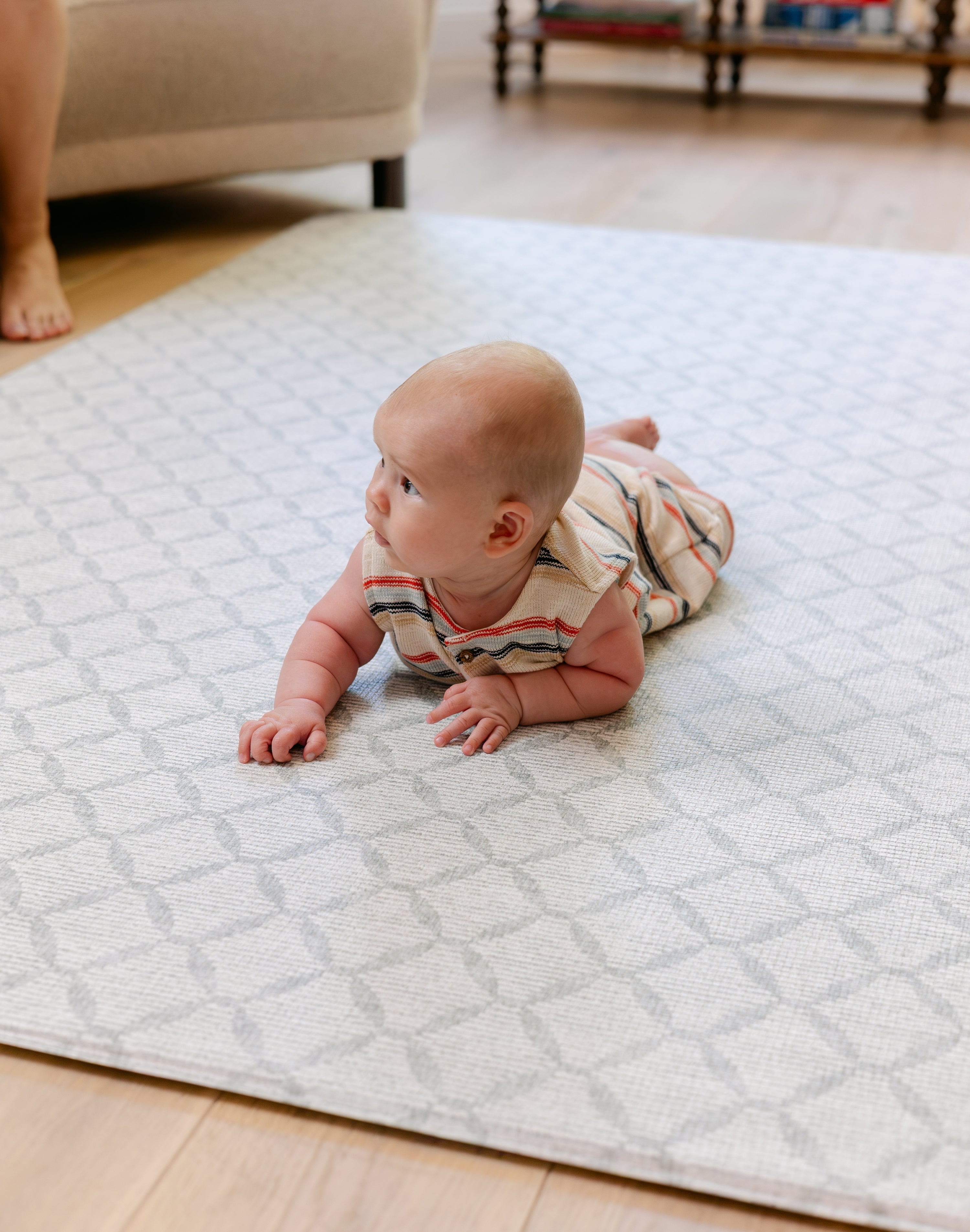
The Gatherer Play Mat offers an understated approach to designing a baby-friendly home. Its fluid, hand-drawn motif takes inspiration from knotted fishing nets, creating a textile-like appearance that works with both neutral and more colorful interiors.
This design can be particularly appealing in a living room where the play area shares space with adult furniture. Rather than introducing a bright, highly contrasting surface, its coastal-inspired palette can complement soft furnishings, natural wood, and muted accessories.
The Gatherer also features a cushioned memory foam construction and a wipeable surface, according to the product information. These practical details make it worth considering for families looking to combine a decorative floor covering with a dedicated area for supervised play.
Its visual versatility is another advantage. The mat can sit beneath a small collection of age-appropriate toys during the day, then remain part of the room's overall design when playtime ends. A nearby basket or low storage unit can keep toys organized without making the space feel crowded.
The Beachcomber Play Mat: Bringing Coastal Calm Into the Play Area
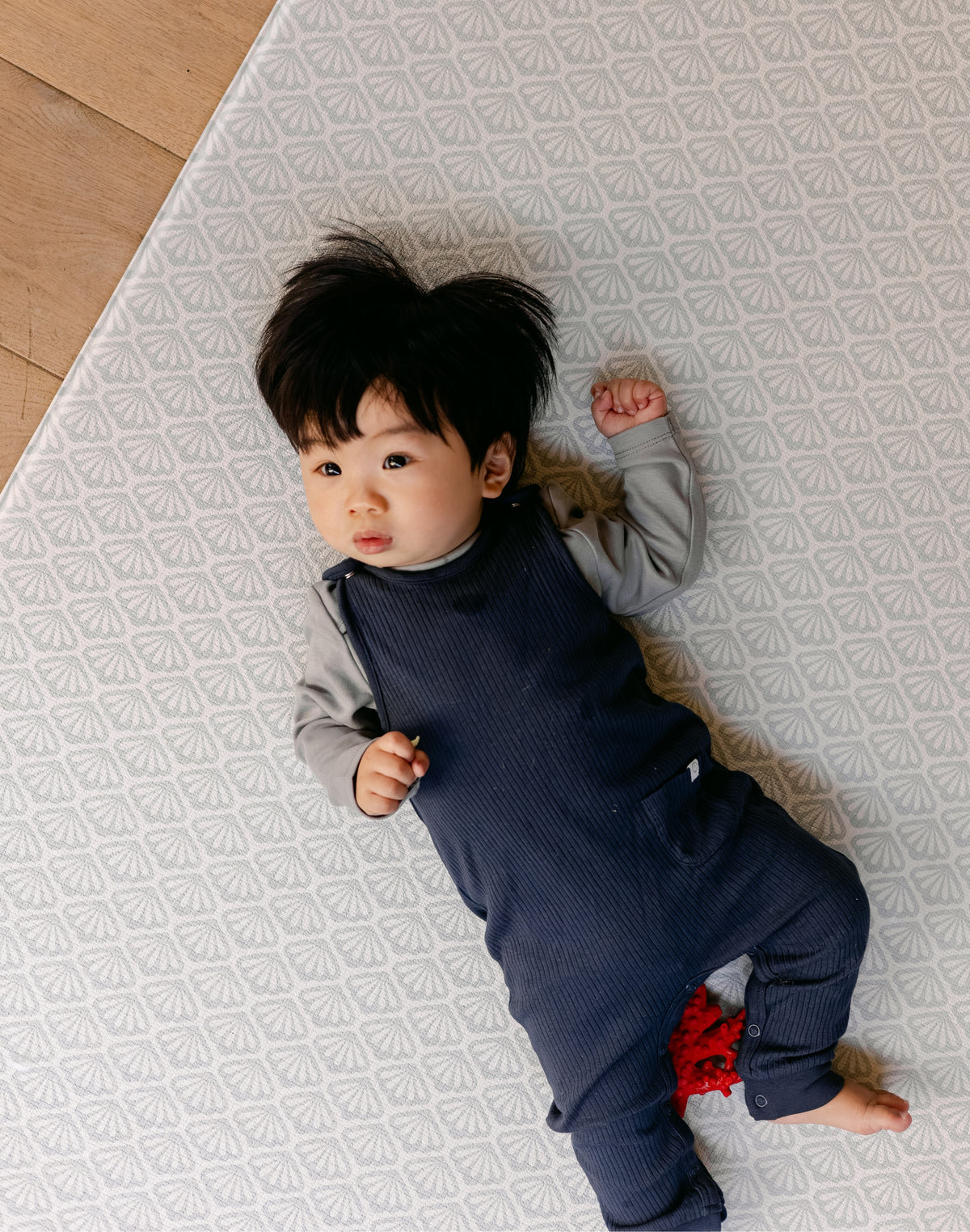
For homes inspired by light, airy interiors, The Beachcomber Play Mat offers a different decorative direction. Its scalloped shell motif draws inspiration from the shoreline, with subtle coastal colors that evoke sea glass and pale sand.
The pattern introduces character without relying on an overtly themed design. This makes it suitable for rooms featuring cream upholstery, soft blue accents, natural textures, or relaxed coastal decor.
Practicality remains central to its appeal. The product features cushioning and a wipe-clean surface, helping create a dedicated area for everyday floor activities. Its appearance can also make a play corner feel like a deliberate part of the home rather than a temporary arrangement.
The Beachcomber is especially relevant for parents who want baby accessories to complement their existing decor. Pairing it with simple wooden toys, fabric storage baskets, and a comfortable chair can create a coordinated space for supervised play and parent-child interaction.
The Globe Trotter Play Mat: A Timeless Look for Family Spaces
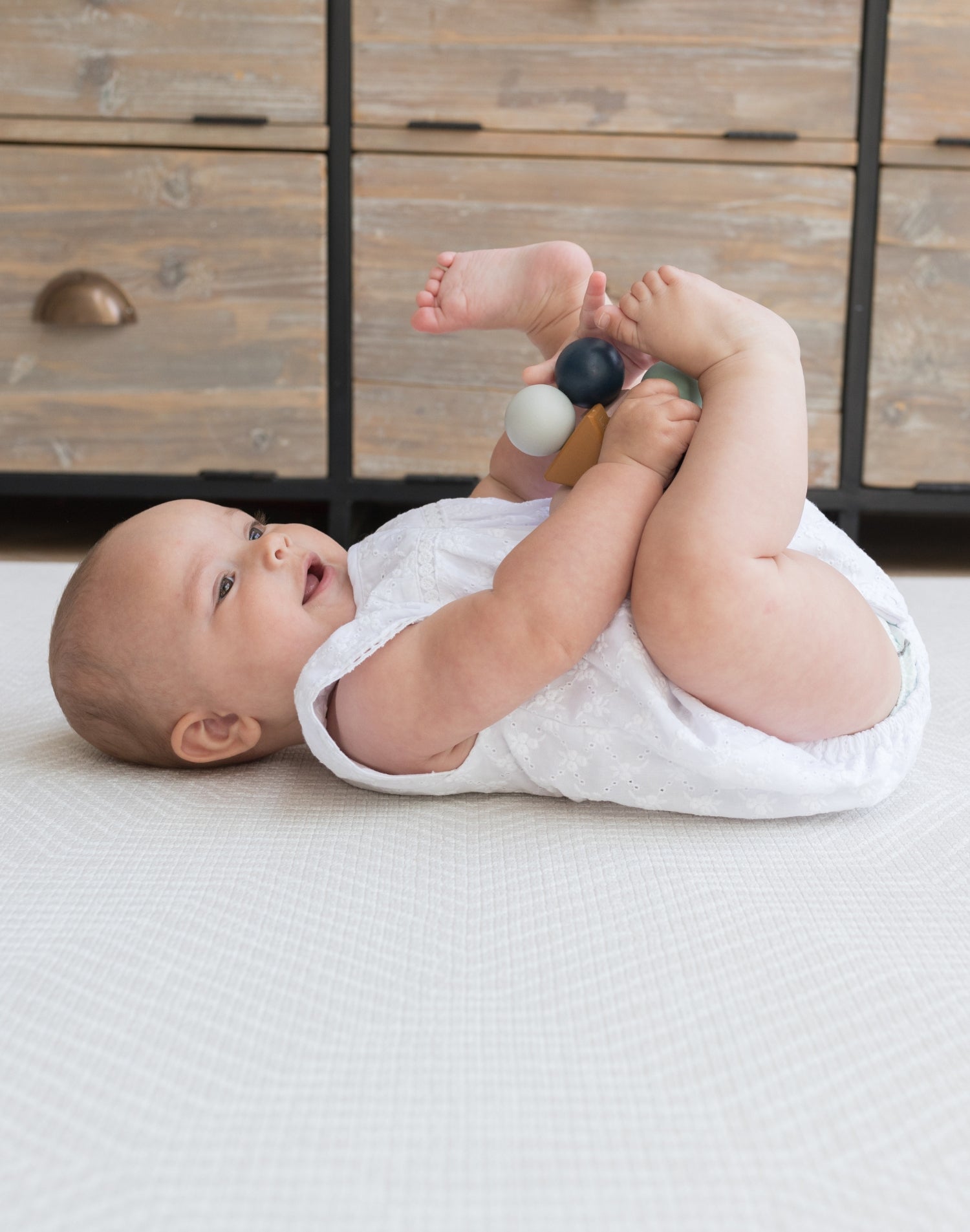
The Globe Trotter Play Mat provides another styling option for families who prefer understated patterns. Its kilim-inspired design brings a traditional textile influence into a contemporary setting, while its softer neutral tones can work with a range of interior styles.
This aesthetic may suit modern bohemian rooms, minimalist living spaces, and homes that combine natural materials with layered textures. The mat can also help visually define a play area without requiring a different color scheme or a dedicated children's room.
As with other cushioned play mats, practical considerations matter as much as appearance. Parents should check the current product specifications for dimensions, material details, cleaning instructions, and safety information to ensure the design suits their household.
When planning the surrounding space, a few carefully selected toys and accessible storage can keep the mat ready for everyday activities. A simple arrangement often works better than filling the entire area with accessories, leaving babies room to move and explore under supervision.
Creating a Play Space That Changes With Each Developmental Stage
A baby's play environment naturally evolves as new skills emerge. During the early months, supervised tummy time and gentle interaction may be the main activities. As babies begin rolling and reaching, toys can be positioned nearby to encourage movement. Later, crawling and standing require more open space and careful attention to the surrounding environment.
A flexible play area can accommodate these changes without requiring a complete redesign. Parents can rotate age-appropriate toys, introduce board books, and create small activity zones as interests develop.
A cushioned mat can provide a consistent location for these routines. Its design should be paired with age-appropriate supervision, secure furniture, and a clear floor area free from small objects, loose cords, and other hazards.
Keeping the Play Area Clean and Organized
An inviting play space is easier to maintain when cleaning and storage are part of the original plan. Play mats with wipeable surfaces can simplify the removal of everyday messes, while a simple storage system keeps toys accessible without spreading them throughout the room.
Totter + Tumble play mats feature a closed-cell surface designed for straightforward cleaning. Following the manufacturer's care instructions, families can wipe away everyday spills with a soft cloth and suitable cleaning solution.
A few practical habits can make daily upkeep more manageable:
- Wipe spills promptly and follow the recommended cleaning instructions.
- Check toys regularly for damage and age-inappropriate parts.
- Use baskets or storage bins to keep frequently used items organized.
- Inspect the surrounding floor for hazards before each play session.
- Allow the play area to remain uncluttered so babies have room to move.
These small routines help create a more functional family environment without adding unnecessary complexity to the day.
Finding the Right Balance Between Comfort and Style
A comfortable baby play space does not have to look separate from the rest of the home. Thoughtful colors, coordinated accessories, and a practical floor covering can help connect the play area with the surrounding interior.
The Gatherer suits families drawn to subtle coastal patterns, The Beachcomber brings a gentle shell-inspired design, and The Globe Trotter offers a neutral, kilim-inspired aesthetic. Each illustrates a different way to approach the same goal: creating a functional space that complements everyday living.
Before selecting a design, parents should consider room dimensions, floor type, cleaning requirements, material specifications, and the activities the mat will support. Product availability should also be confirmed directly, as individual designs and sizes can change.
Conclusion
From the first supervised tummy-time sessions to the energetic discoveries of toddlerhood, a dedicated floor-play area can become an important part of family life. The most effective spaces combine room for movement, practical cleaning routines, appropriate safety measures, and a design that feels natural within the home.
With its cushioned construction and wipeable surface, a thoughtfully chosen play mat can help make everyday floor activities more comfortable and manageable. The Gatherer, Beachcomber, and Globe Trotter designs from Totter + Tumble offer distinct aesthetic directions for parents who want baby-friendly functionality without compromising their interior style.
Ultimately, creating a welcoming play space is less about filling a room with accessories and more about making thoughtful choices. A clear floor, a few suitable toys, attentive supervision, and a comfortable setting can provide a practical foundation for everyday moments of connection, movement, and discovery.
live smarter
Shop smarter, live better, and stay ahead of the trends with our reliable recommendations!



Health and Beauty
13 min read
MitoPRO X vs. MitoADAPT 4.0: Which Red Light Therapy Panel Is Right for Different Needs?

Fitness and Sports
7 min read
Teeter Home Fitness Essentials: FitSpine LX9, FreeStep LT7, and ProFlex 432 for Recovery, Cardio, and Strength

trending
Home and Decor
7 min read
Small Apartment Lighting Ideas That Maximize Space and Style
Gadgets and Tech
9 min read
Happy Customers Can Become Your Strongest Online Proof
Fashion
9 min read
A Smarter Way to Pack for Your Next Round of Golf
Health and Beauty
9 min read
Thinning Hair Deserves a Smarter Everyday Routine
Fitness and Sports
15 min read
How to Make a Daily Vitamin Routine More Enjoyable and Consistent
Travel
7 min read